Ex-Lobbyists in Obama Administration Don't Undermine Ethics Policy, White House Says

The Obama administration is defending its commitment to strict ethical policies, even after appointing lobbyists to key posts.

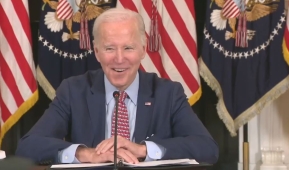
Vice President Joe Biden looks on as President Barack Obama signs executive orders, Wednesday, Jan. 21, 2009, in the Eisenhower Executive Office Building in Washington. (AP Photo/Ron Edmonds)

White House (CNSNews.com) – The Obama administration is defending its commitment to strict ethical policies even after appointing lobbyists to key posts.
 
Mark Patterson, a former lobbyist with the financial firm Goldman Sachs, will be chief of staff for newly appointed Treasury Secretary Timothy Geithner, according to the National Journal.
 
The news comes a week after some government watchdog groups objected to the nomination of William J. Lynn III, a former Raytheon Company lobbyist, to be deputy secretary at the Department of Defense.
 
“There is no question that the policy is right out of step when you get to make exceptions for major departments like Defense and Treasury,” Ken Boehm, chairman of the National Legal and Policy Center, told CNSNews.com.
 
“It cuts into any credible attempt the administration is reforming things. They haven’t reformed anything. They hire a lobbyist when they want to and say it’s an exception. It makes a mockery of the stated intent,” Boehm said.
 
Also, William Corr, a former anti-tobacco lobbyist, was named as deputy secretary of Health and Human Services. Corr reportedly pledged not to take part in tobacco matters.
 
On his first day in office, President Barack Obama signed an executive order that requires any presidential appointees to sign a pledge precluding an appointee from participating “in any particular matter on which I lobbied within the 2 years before the date of my appointment” or accepting “employment with any executive agency that I lobbied within the two years before the date of my appointment.”
 
Goldman Sachs, as a recipient of some of the Troubled Assets Relief Program (TARP) money, could have a vested interest in decisions made by the Treasury Department, critics said. Likewise, Raytheon, a major defense contractor, would have an interest in decisions made at the Pentagon.
 
“If people follow the issue closely and have seen the revolving door in previous administrations, they will see our policy is the strongest of any administration in history,” White House Press Secretary Robert Gibbs told reporters Wednesday. “We have a policy that governs this White House and this administration unlike any covered in this city.”
 
Gibbs said other good government advocates have agreed that it “makes sense” to provide some waivers to people who have experience and expertise on certain matters.
 
The policy says that the director of the Office of Management and Budget can grant a waiver to an appointee if the literal application of the restriction is not consistent with the purpose of the restriction or if the appointment serves the public interest.
 
Four “good government” groups wrote to Senate Armed Services Committee Chairman Carl Levin of Michigan and ranking Republican John McCain of Arizona in opposition to the Lynn nomination.
 
“The letter is not to suggest that Mr. Lynn is not qualified for the position,” said the letter from the Project on Government Oversight, Citizens for Responsibility and Ethics in Washington, the Government Accountability Office and Public Citizen.
 
But the groups stated that given Obama’s executive order, “the undersigned groups believe that Mr. Lynn simply could not effectively serve as the Deputy Secretary of Defense.”
E-Brief