Obama Cites Bible to Make Case That ‘Immigration Reform Is A Moral Imperative’

Hispanics-Obama

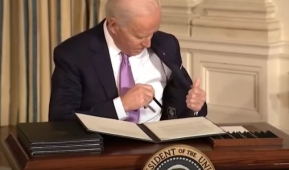
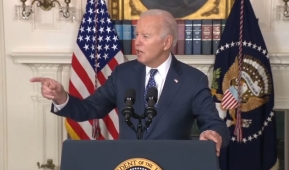
President Barack Obama delivers remarks at the Esperanza National Hispanic Prayer Breakfast and Conference in Washington on June 19, 2009. (AP File Photo/Pablo Martinez Monsivais)

Washington (CNSNews.com) - President Barack Obama, when speaking at the National Hispanic Prayer Breakfast and Conference Thursday, quoted the Bible to make a case that passing immigration reform is a “moral imperative.”

Nevertheless, Sen. Charles Schumer (D-N.Y.), chairman of the Senate Judiciary Subcommittee on Immigration, Border Security and Citizenship, suggested that proponents of immigration reform should shift the focus away from it being a “compelling moral issue” and instead argue that it is “a compelling economic necessity for America.”

“Comprehensive reform is not only an economic imperative or a security imperative, it’s also a moral imperative,” Obama told the attendees of the prayer breakfast that took place in Washington, D.C. on Friday. “It’s a moral imperative when kids are being denied the chance to go to college or serve their military because of the actions of their parents. 

“It’s a moral imperative when millions of people live in the shadows and are made vulnerable to unscrupulous businesses or with nowhere to turn if they are wronged. It’s a moral imperative when simply enforcing the law may mean inflicting pain on families who are just trying to do the right thing by their children,” Obama added.

In making his case that immigration reform is morally imperative, the president quoted the Book of Deuteronomy – comparing illegal immigrants to the Jews in Egypt. 

“Immigration reform is a moral imperative, and so it’s worth seeking greater understanding from our faith,” said Obama. “As it is written in the Book of Deuteronomy [10:19], ‘Love ye therefore the stranger: for ye were strangers in the land of Egypt.’ To me, that verse is a call to show empathy to our brothers and our sisters; to try and recognize ourselves in one another.

“It’s especially important that we try to do that when it comes to immigration – because this is a subject that can expose raw feelings and feed our fears of change. It can be tempting to think that those coming to America today are somehow different from us,” he continued, “and we need to not have amnesia about how we populated this country.”  

“What this verse reminds us to do is to look at that migrant farmer and see our own grandfather disembarking at Ellis Island, or Angel Island in San Francisco Bay; and to look at that young mother, newly arrived in this country, and see our own grandmothers leaving Italy or Ireland or Eastern Europe in search of something better,” he further said.

Filling in for Senate Majority Leader Harry Reid (D-Nev.), who cancelled his scheduled appearance, Schumer told the crowd, “I very much appreciate that immigration [reform] is a compelling moral issue because many of your parishioners are suffering in broken families separated by our broken system, but frankly as persuasive as the moral arguments are to us, we have to shift the focus and explain to our friends, co-workers, opponents and political leaders why immigration reform is an economic imperative, a compelling economic  necessity for America.”

The New York senator told the crowd that he is “optimistic” that the current Congress will pass immigration reform, adding that reforming the U.S. immigration system is the short-term solution to creating jobs and economic opportunity in America.

Reiterating comments he made during his visit this week to the border city of El Paso, Texas, Obama said that the U.S. is a nation of immigrants and laws.

The U.S. is “a nation of immigrants and a nation of laws,” said the president, “and what I went down to El Paso to say is that we are enforcing our laws and we’re securing our borders. In fact, we have more manpower down at the Southwest border than at any time in our history.”

According to statistics from the Department of Homeland Security, as of the end of September 2010, the government had established effective control in less than 50 percent of the southwest border.

Obama called on the attendees to “keep praying” and “to keep preaching and persuading your congregations and communities” to build a “widespread movement for reform.” 

A 2007 study by the Pew Hispanic Center and Pew Forum on Religion & Public Life found that “More than two-thirds (68 percent) of Hispanics are Roman Catholics. The next largest category, at 15 percent, is made up of born-again or evangelical Protestants.”

“That sense of connection, that sense of empathy, that moral compass, that conviction of what is right is what led the National Association of Evangelicals to shoot short films to help people grasp the challenges facing immigrants,” said Obama. “It’s what led the United States Conference of Catholic Bishops to launch a Justice for Immigrants campaign, and the Interfaith Immigration Coalition to advocate across religious lines.”

“Ultimately, that’s how change will come,” he continued, later adding, “It was in our Episcopal churches of Boston that our earliest patriots planned our Revolution. It was in the Baptist churches of Montgomery and Selma that the civil rights movement was born.”

The 2011 National Hispanic Prayer Breakfast and Conference that began May 10th and is expected to conclude Friday is sponsored by Esperanza (Spanish for hope), one of the largest faith-based Evangelical networks in the U.S. that is pushing for immigration reform.

E-Brief